
Netherlands 5-1 Sweden was not a contest that crept up on anyone. It arrived inside twenty minutes and never loosened its grip. Two goals in the opening quarter of an hour set the tone at a full Philips Stadion。and the pattern was obvious from the first whistle: Dutch wingers pinned the Swedish full-backs so deep that the visitors' midfield had nobody left to pass to, and every turnover became a shooting chance within three touches. The opening goal came from a move lasting eleven seconds — goalkeeper to right winger, one touch inside, a low cross, a finish from six yards. The second was uglier and far more damaging: a misplaced pass under pressure, a quick counter, and a shot that squirmed under the goalkeeper's body. Sweden's back four, missing its most experienced centre-half, looked like a group that had met for the first time that afternoon. The Netherlands, by contrast, played with the cold confidence of a side that had rehearsed this exact scenario for a fortnight.The shape explains most of it. The Dutch lined up 4-3-3 and shifted into a 3-2-5 in possession, the left-back pushing high while the holding midfielder dropped between the centre-backs. Sweden answered with man-for-man pressing and got picked apart for their trouble. Their midfield line sat ten metres too high for half an hour, which is precisely where the third and fourth goals were born — a clipped ball over the top, a first-time finish, and a stadium that already knew how the evening would end. Sweden's only genuine spell of control came either side of half-time, and it produced their goal: a scrappy, deflected effort from a corner that the Dutch goalkeeper will not want to watch again. Even that felt like a consolation rather than a turning point. The Dutch captain, in and out of his club side all season。was the best player on the pitch and it wasn't especially close.By the hour mark, Netherlands 5-1 Sweden was settled in everything but the record books. What stood out was not the volume of chances but the quality of the decisions behind them. The Dutch front three rotated constantly — the striker dropping into midfield, the right winger drifting inside。
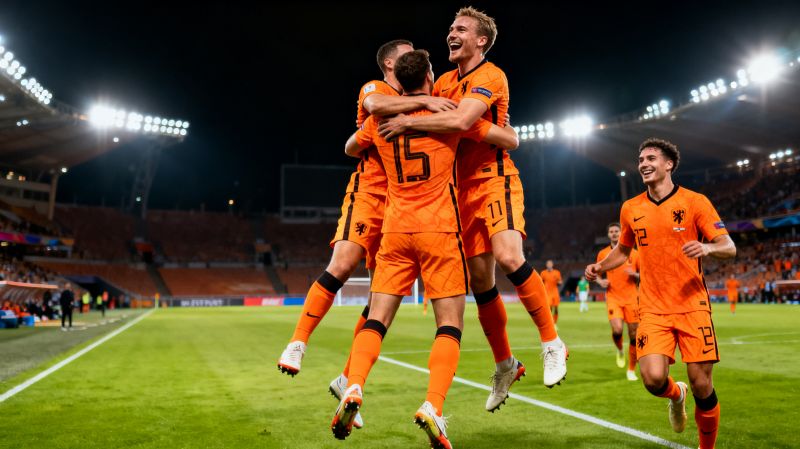
the number ten arriving late at the back post. Sweden's defenders kept handing runners on, and nobody ever picked them up. Two of the five goals came from cutbacks that a well-organised youth side would have cleared, which is the part that will sting most when the video review starts on Monday morning. Netherlands 5-1 Sweden flattered the winners slightly, and both coaching staffs will know it.Scorelines like this reshape a group table more than the arithmetic suggests. Goal difference is the obvious beneficiary, and in a campaign where second place is often decided by a single point。a four-goal cushion is worth roughly as much as a win over a mid-table rival. For Sweden, the damage is harder to measure. They now need results away from home against teams that will happily sit deep and force them to break down a low block — the exact problem they failed to solve here. Their manager waited until 3-0 to change shape, and by then the game had already been decided. That is the awkward part of a result like this: the table looks decisive, the underlying numbers far less so.There is a temptation to file this under statement performances. I would be more careful. The Netherlands were sharp and clinical, but Sweden made them look better than they were for long stretches — half-hearted pressing。
full-backs who never adjusted, a midfield that stopped tracking runners after the second goal. Against a disciplined side with a genuine counter-attack, that Dutch high line will be tested, and the space behind it is real. Five goals in a competitive fixture is still not an accident, though. Netherlands 5-1 Sweden will be remembered less for the scoreline than for the speed at which the Dutch turned pressure into goals, and for how little Sweden had left once the first one went in.